
Forensic Spine Injury Analysis
Independent Spine Injury Evaluations for Attorneys
When the medical record, MRI report, and mechanism of injury do not fully explain the patient’s clinical presentation.
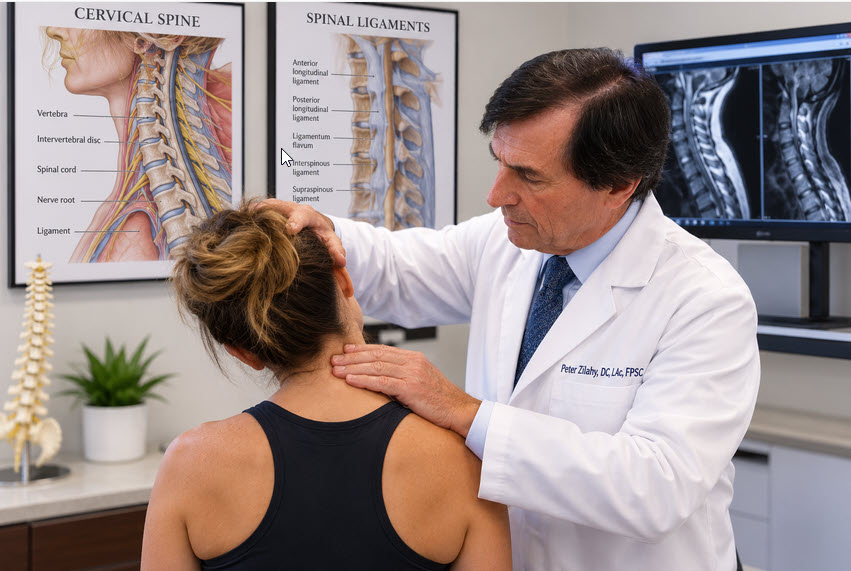
I provide independent spine injury evaluations integrating medical record analysis, clinical history and patient interview, review of the actual MRI images, clinical examination when appropriate, spinal biomechanics, and causation analysis. The objective is to evaluate whether the available evidence supports a clinically and biomechanically consistent explanation for the patient’s condition.
WHEN TO REFER
When Should You Consider an Independent Spine Injury Evaluation?
Some spinal injury cases present a disconnect between the patient’s persistent clinical presentation and the existing medical record. An independent evaluation can help assess whether the objective evidence supports the claimed injury and its relationship to the collision.
01
Low-Speed or Limited-Damage Collision
than vehicleThe severity of the patient’s injury is questioned because the collision involved relatively little vehicle damage.
Analysis of collision mechanics, occupant kinematics, spinal tissue loading, clinical findings, and diagnostic imaging can provide a more complete assessment than vehicle damage alone.
02
Pre-Existing Injury or Degeneration
A prior spinal injury or pre-existing degenerative findings can complicate the assessment of medical causation.
The evaluation addresses whether the evidence supports a new traumatic injury, aggravation of a pre-existing condition, or symptoms attributable to an unrelated degenerative process.
03
MRI–Clinical Discrepancy
The patient remains symptomatic, but the findings in the original radiology report does not adequately explain the clinical presentation.
The actual MRI images are independently reviewed and correlated with the patient’s symptoms, objective examination findings, clinical course, and injury mechanism .
04
Suspected Ligament Injury or Instability
Persistent cervical symptoms, abnormal motion, or other clinical findings may raise concern for ligament injury or spinal instability.
Clinical examination, MRI findings, and dynamic imaging when clinically indicated are correlated to evaluate ligament integrity, abnormal intersegmental motion, and whether the findings are consistent with traumatic ligamentous injury.
05
Complex Injury Causation
Individual pieces of evidence may exist, but their significance often becomes clearer when evaluated together.
Medical records, clinical findings, diagnostic imaging, and spinal biomechanics are integrated to evaluate whether the evidence supports a coherent explanation for the patient’s condition and its relationship to the injury event.
An Integrated Approach
The Evidence Should Not Be Evaluated in Isolation
A spinal injury cannot be fully understood from a single MRI finding, examination result, or description of vehicle damage. Each component of the evidence must be evaluated in context and correlated with the patient’s clinical presentation and injury mechanism. The objective is to evaluate whether multiple independent sources of evidence converge upon a clinically and biomechanically consistent explanation for the patient’s condition..
From Mechanism to Pathology
See How the Evidence Connects
Understanding spinal injury requires more than identifying an abnormality on MRI. The collision mechanism, occupant motion, resulting tissue loading, objective imaging findings, and clinical findings must be evaluated together.
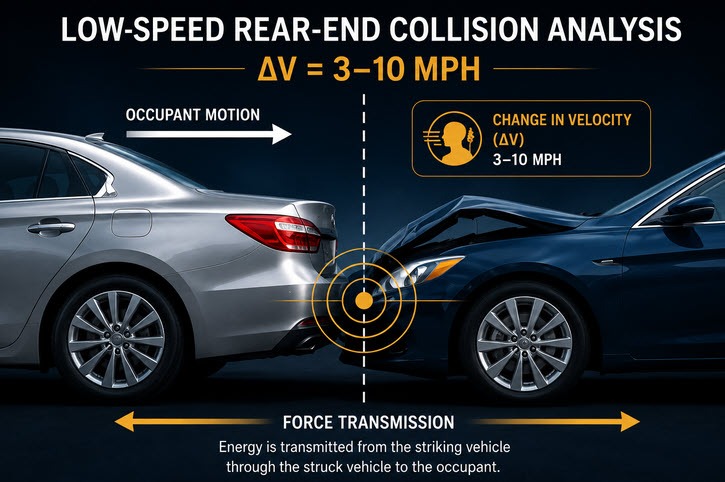
01
Collision & Occupant Mechanics
The analysis begins with the collision sequence, vehicle motion, occupant kinematics, and resulting spinal tissue loading.
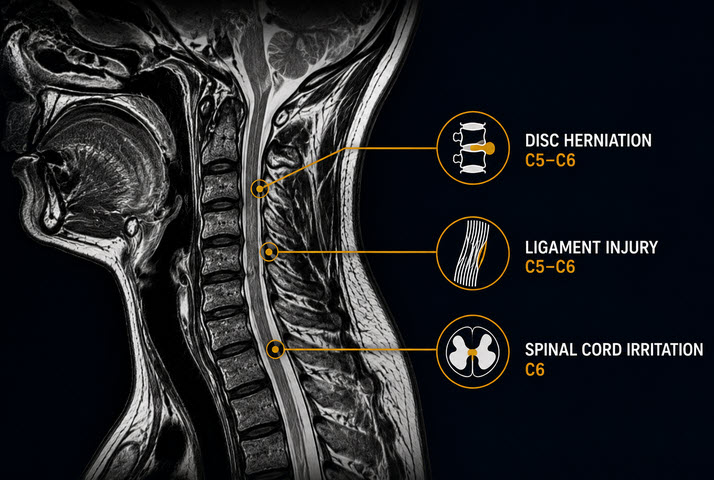
02
Objective MRI Findings
Independent review of the actual MRI images may identify clinically significant findings requiring correlation with the patient’s symptoms, objective examination findings, clinical history, and injury mechanism.
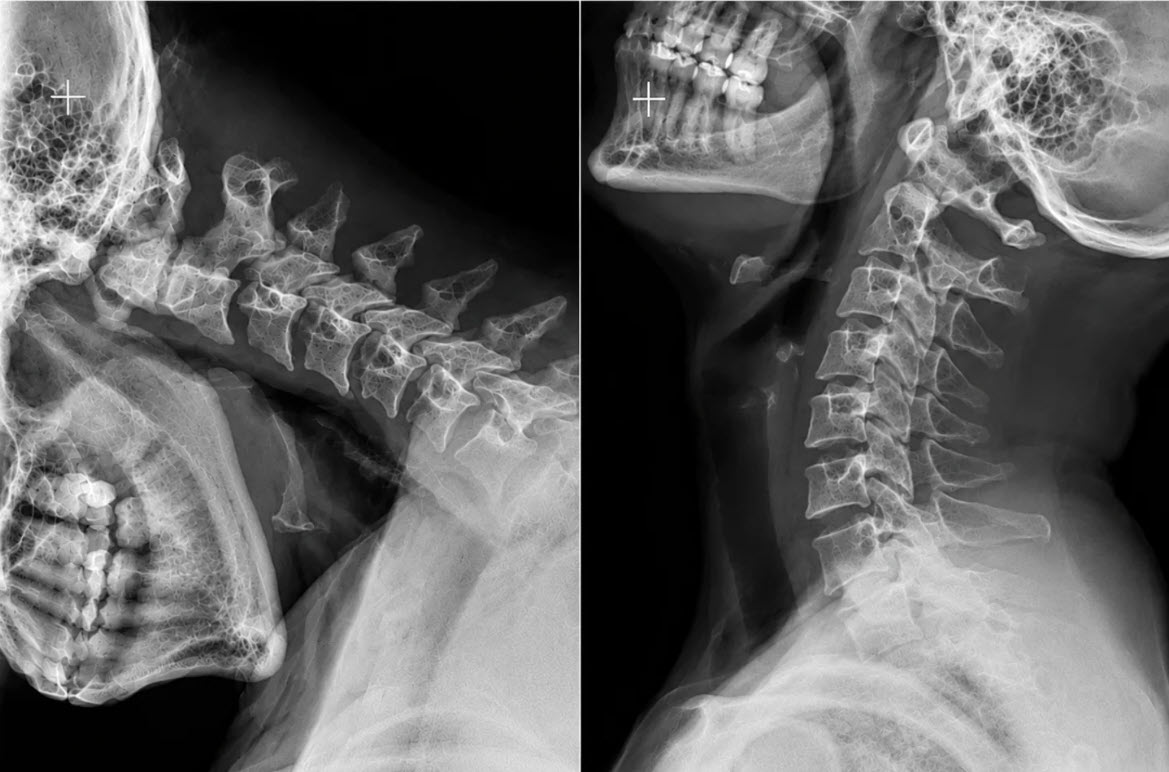
03
Objective Spinal Instability
Dynamic imaging can objectively quantify abnormal intersegmental motion and provide evidence relevant to the assessment of spinal instability.
MECHANISM → TISSUE LOADING → OBJECTIVE PATHOLOGY → CLINICAL CORRELATION
Independent findings become most meaningful when they demonstrate an anatomically, clinically, and biomechanically consistent pattern.
Comprehensive Case Analysis
What the Evaluation Includes
Each evaluation is tailored to the clinical and causation issues presented in the individual case. Clinical findings, diagnostic imaging, medical records, and biomechanical evidence are independently evaluated and correlated to assess what the totality of the evidence supports
Clinical & Diagnostic Evaluation
Clinical Examination When Performed
When an examination is clinically appropriate and part of the assignment, a focused neurologic, orthopedic, and spinal examination documents objective findings relevant to the disputed injuries.
Independent MRI Image Review
The actual MRI images are independently reviewed and correlated with the patient’s symptoms, objective examination findings, and clinical history rather than relying solely on the written radiology report.
Ligament & Instability Assessment
When clinically indicated, the evaluation includes assessment for ligamentous injury and abnormal spinal motion through correlation of the clinical examination, MRI findings, and dynamic imaging.
Forensic & Biomechanical Analysis
Collision & Occupant Biomechanics
The collision mechanism is evaluated to assess vehicle motion, occupant kinematics, acceleration-deceleration dynamics, and resulting spinal tissue loading
Medical Record Analysis
The medical chronology is reviewed for pre-existing conditions, symptom onset, diagnostic findings, treatment response, subsequent events, and potential alternative explanations.
Clinical-Imaging Correlation
Clinical findings are anatomically correlated with MRI and other diagnostic imaging to evaluate whether independent sources of evidence demonstrate a consistent injury pattern.
Medical Causation
History, temporal relationship, clinical findings, diagnostic imaging, biomechanics, and relevant medical literature are integrated to determine whether the evidence supports a causal relationship within a reasonable degree of professional probability.
Patient-Specific Visual Demonstratives
Patient-specific imaging and biomechanical findings are organized into clear visual demonstratives to help attorneys, treating providers, and jurors understand the relevant evidence.
The final opinion is based upon convergence of the evidence—not upon any single symptom, test, image, or assumption.
ATTORNEY PERSPECTIVE
Nate Nasser
Partner
INDEPENDENT ANALYSIS
The Objective Is Not to Advocate.
It Is to Evaluate What the Evidence Supports.
An independent evaluation should withstand scrutiny regardless of which party requests it. Opinions are based on the clinical history, objective clinical findings, diagnostic imaging, biomechanical analysis, and relevant scientific evidence.
The purpose is not to begin with a predetermined conclusion, but to evaluate whether the available evidence supports the claimed injury, its relationship to the event, and the resulting functional consequences.
REPRESENTATIVE FORENSIC ANALYSIS
Independent Spine Injury Evaluation
Clinical Examination
MRI Image Review
Spinal Biomechanics
Medical Causation
Peter Zilahy, DC, LAc, FPSC
Confidential • Patient Information Redacted
REPRESENTATIVE ANALYSIS
See How the Evidence Is Analyzed
Representative matters illustrate how medical records, diagnostic imaging, collision biomechanics, objective clinical findings, and scientific literature can be integrated to address disputed spinal injury causation.
Detailed representative reports may be provided selectively to attorneys considering retention.

Clinical • Imaging • Biomechanics
A Clinical , Imaging & Forensic Perspective on Spine Injury
Dr. Zilahy brings more than four decades of clinical spine experience to the evaluation of spinal injury, integrating advanced imaging, clinical findings, biomechanics, and forensic case analysis.
- Fellow, Primary Spine Care (FPSC)
- Advanced MRI Interpretation & Clinical Imaging Correlation
- Spinal Trauma & Ligament Injury
- Northwestern University Traffic Crash Investigation & Vehicle Dynamics
- Deposition, Arbitration & Trial Testimony
Attorney Referrals
Referring a Client Is Straightforward
The referral process is designed to be efficient for both the attorney and client. Each evaluation is tailored to the clinical, diagnostic, biomechanical, and causation issues presented by the case.
01
Contact
Provide basic case information, the issues requiring evaluation, and the specific questions to be addressed.
02
Record Review
03
Examination When Appropriate
When clinically appropriate and part of the assignment, a focused examination is performed to document objective findings relevant to the injuries and causation issues presented.
04
Analysis
Clinical findings, medical history, actual diagnostic images, collision and occupant biomechanics, and other objective evidence are correlated and evaluated together.
05
Report
A structured forensic report presents the relevant findings, clinical-imaging correlation, analysis, and expert opinions in a clear and understandable format.
Not Sure Whether the Case Warrants a Full Evaluation?
Contact Dr. Zilahy to discuss the clinical and causation issues before scheduling an evaluation. A preliminary discussion can help assess whether an Independent Spine Injury Evaluation is appropriate for the questions presented.
Initial attorney case conference — up to 15 minutes complimentary.
Have a Difficult Spine Case?
Let the Evidence Guide the Opinion.
Whether the issue involves disputed causation, pre-existing injury or degeneration, an MRI that does not fully account for the clinical presentation, or suspected structural spinal injury, an independent evaluation can bring the clinical, imaging, and biomechanical evidence together.
Send me the difficult spine case.